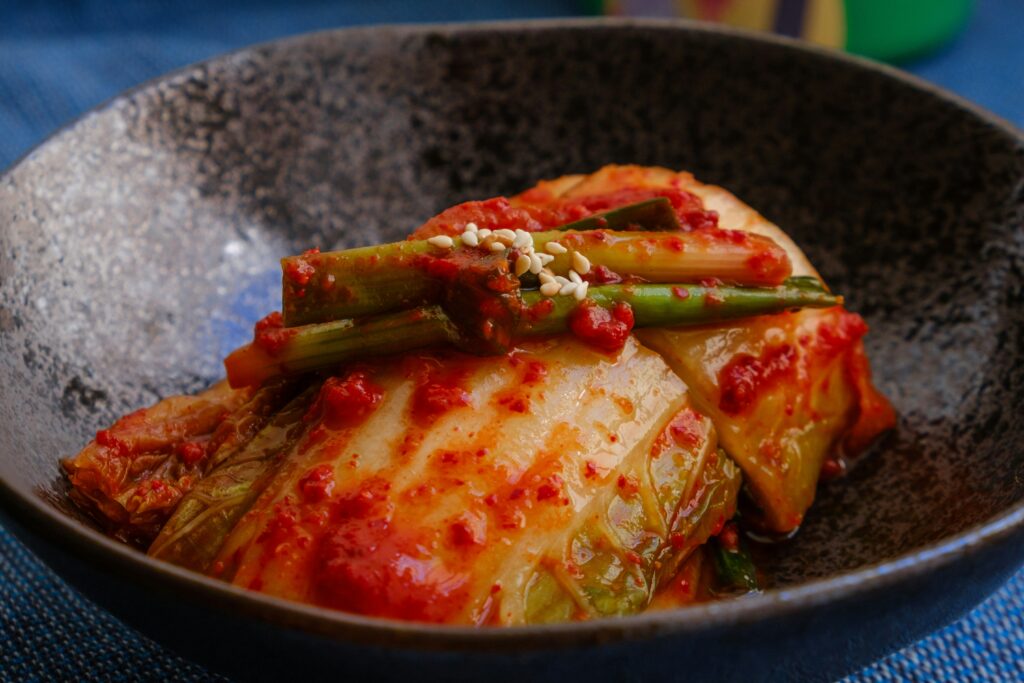
A Spicy, Tangy, and Cultural Icon Loved Around the World
What Is Kimchi?
Kimchi is the soul of Korean cuisine—a traditional fermented dish made primarily from vegetables such as napa cabbage, radish, or cucumber, seasoned with chili pepper, garlic, ginger, fish sauce, and salt. This mixture is left to ferment, creating a distinctive flavor profile that is spicy, sour, and umami all at once.
While there are hundreds of varieties, the most common form is Baechu Kimchi, made from whole napa cabbage leaves carefully layered with red pepper flakes and aromatic spices. The balance of spice, acidity, and crunch gives kimchi its irresistible and unforgettable taste.
A Taste of Korean Heritage
Kimchi is more than just a food—it is deeply intertwined with Korean identity and tradition. For centuries, it has been a vital part of Korean meals, enjoyed with almost every dish. In fact, Koreans often say that a meal without kimchi feels incomplete.
The act of making kimchi, known as Kimjang, is a communal event where families and neighbors gather in late autumn to prepare large quantities for the cold winter months. Kimjang embodies the spirit of sharing, cooperation, and care that defines Korean society. In 2013, UNESCO recognized Kimjang as an Intangible Cultural Heritage of Humanity, highlighting its cultural and social importance.
The Art of Fermentation
Kimchi-making is a delicate process that requires patience and precision. After salting the vegetables to remove excess water, they are coated with a spicy seasoning mix and stored in earthenware pots called onggi. Traditionally, these pots were buried underground to maintain a stable temperature during fermentation.
Depending on the ingredients and temperature, kimchi can take from a few days to several months to mature. As it ferments, beneficial bacteria—particularly Lactobacillus—develop, enhancing both flavor and nutritional value.
Regional and Seasonal Varieties
Across Korea, there are over 200 types of kimchi, each reflecting local ingredients and climate.
- Baechu Kimchi (Cabbage Kimchi) – The most classic and widely eaten version.
- Kkakdugi (Cubed Radish Kimchi) – Crunchy and slightly sweet, perfect with soups.
- Baek Kimchi (White Kimchi) – Non-spicy, mild, and often served to children or elders.
- Oi Sobagi (Cucumber Kimchi) – Refreshing and best enjoyed in summer.
- Chonggak Kimchi (Ponytail Radish Kimchi) – Firm and flavorful, popular in central Korea.
Every region also has its own twist: Jeolla-do uses more salted seafood for a rich flavor, while Gangwon-do prefers lighter, less salty versions using mountain vegetables.
Health Benefits of Kimchi
Kimchi is not only delicious—it’s also one of the world’s most nutritious foods. Packed with vitamins A, B, and C, as well as probiotics, kimchi supports gut health, digestion, and immunity.
Recent studies have even shown that regular kimchi consumption may help lower cholesterol, improve metabolism, and fight inflammation. Because it’s naturally low in calories and rich in fiber, it’s often recommended as part of a healthy and balanced diet.
Kimchi in Modern Cuisine
As Korean culture gains global recognition through K-pop, K-dramas, and K-food, kimchi has found its way onto tables around the world. It’s now used in countless fusion dishes, from kimchi tacos and kimchi burgers to kimchi pasta and grilled cheese sandwiches.
Chefs love experimenting with its bold flavors, and many international food lovers have even begun making their own kimchi at home. This growing popularity shows how a humble fermented vegetable dish has become a global culinary phenomenon.
Kimchi Beyond the Kitchen
In Korea, kimchi isn’t just eaten—it’s celebrated. There are kimchi museums in Seoul and Gwangju, and even kimchi festivals where visitors can taste, make, and learn about the art of fermentation. These events highlight the pride Koreans take in preserving their culinary traditions.
Kimchi also plays a symbolic role in Korean culture—it represents patience, community, and harmony with nature. The process of waiting for kimchi to mature mirrors the Korean belief that good things take time.
How to Enjoy Kimchi
There are endless ways to enjoy kimchi:
- As a side dish with rice and other banchan.
- In Kimchi Jjigae (Kimchi Stew), a hearty and spicy comfort food.
- Stir-fried with rice and eggs to make Kimchi Bokkeumbap.
- Added to pancakes (Kimchi Jeon) for a crispy, savory treat.
- Mixed into ramen or dumplings for an extra burst of flavor.
Whether it’s fresh, aged, mild, or spicy, kimchi brings warmth and excitement to every meal.