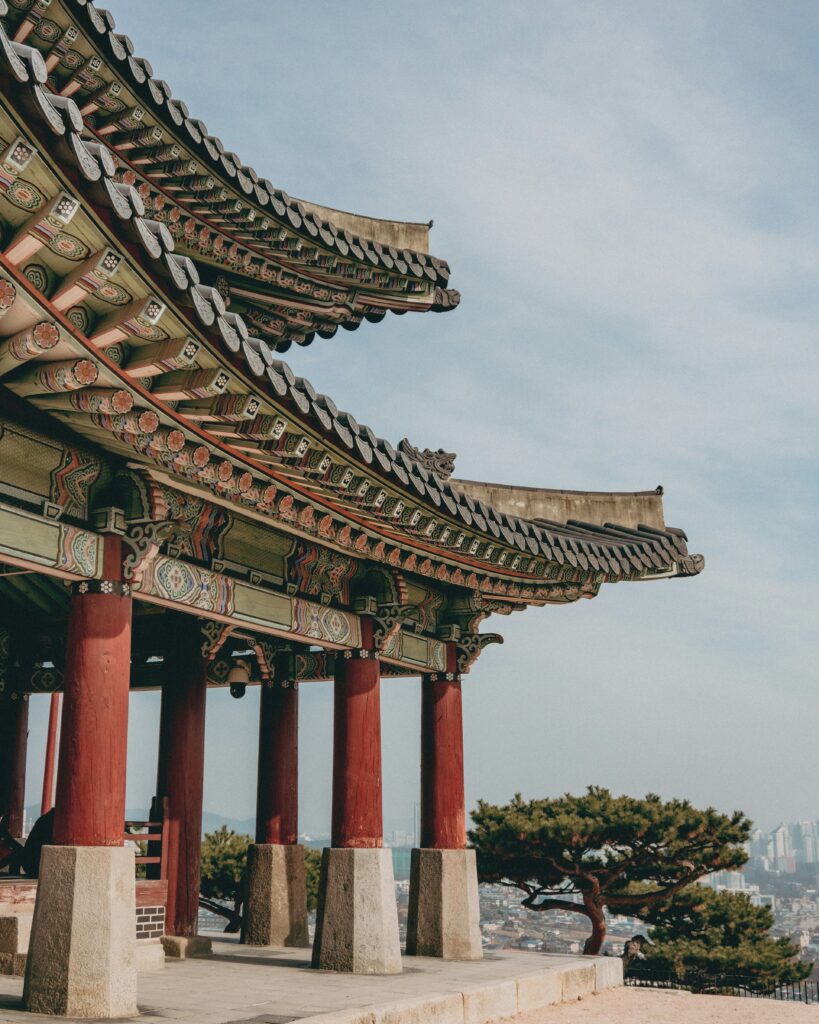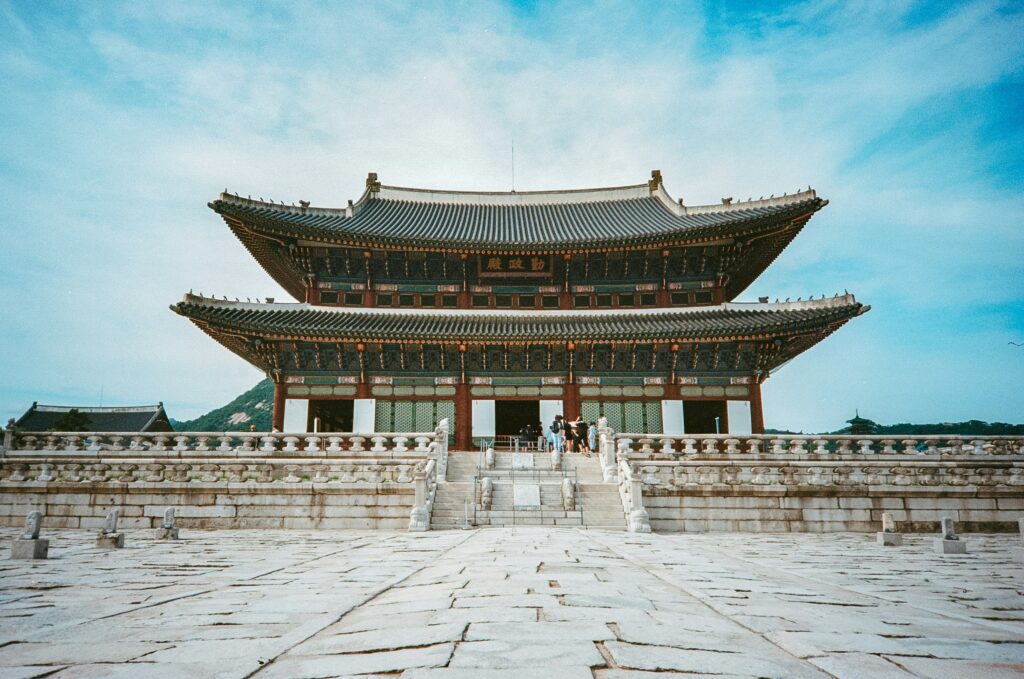
Gyeongbokgung, located at 161 Sajik-ro in Jongno-gu, Seoul, is the primary royal palace of the Joseon Dynasty and is designated as Historic Site No. 117. Built by King Taejo after founding Joseon and relocating the capital to Hanyang, it became the dynasty’s first and most important palace. Its architectural principles later influenced major East Asian palaces, including Beijing’s Forbidden City.
A Palace Marked by Turbulence and Restoration
In 1592, Gyeongbokgung was destroyed during the Japanese invasions of Korea and remained in ruins for 275 years. It was not until 1865, under the reign of King Gojong, that the palace was rebuilt to restore royal authority. At the time of completion, the palace contained around 30 buildings, featuring more than 7,400 rooms across the inner palace and rear garden. Despite its grandeur, many structures were relocated, demolished, or sold during the late Joseon period, the Korean Empire era, and particularly during the Japanese occupation.
Modern Restoration Efforts
Even after Korea’s liberation, additional palace buildings were dismantled, leaving Gyeongbokgung with only 36 remaining structures by 1990—just 7 percent of its size during King Gojong’s reign. Since then, large-scale restoration projects have been ongoing, gradually bringing the palace closer to its historical form. Today, Gyeongbokgung stands not only as a symbol of Korean heritage but also as a vivid reminder of resilience, cultural pride, and national identity.
Why Gyeongbokgung Matters Today
For visitors, Gyeongbokgung offers a rare opportunity to walk through Korea’s royal history. Its restored halls, open courtyards, and traditional gardens show the architectural sophistication of the Joseon Dynasty. The palace serves as a living museum where travelers can appreciate Korea’s past and experience the enduring spirit of its culture.