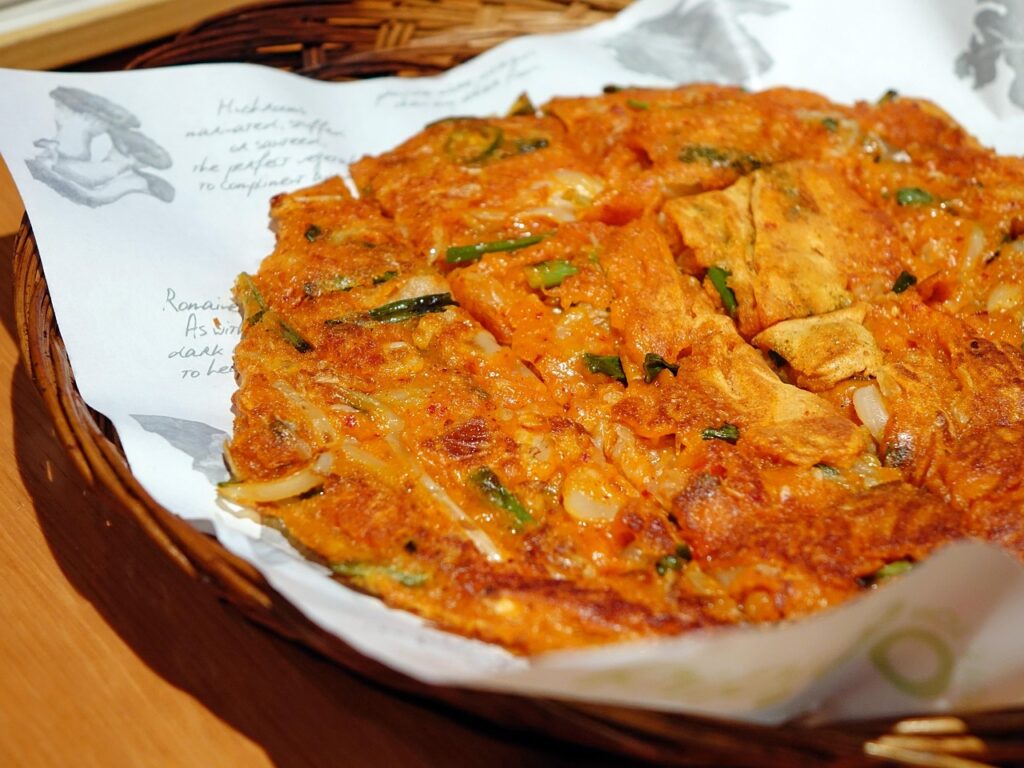
Introduction to Kimchi Jeon
Kimchi Jeon, also known as kimchi pancake, is one of Korea’s most beloved comfort foods, offering a flavorful blend of spicy, tangy, and savory notes that make it a popular choice for snacks, side dishes, and casual meals. Made primarily from well-fermented kimchi mixed with a simple batter, Kimchi Jeon delivers a satisfying crispness on the outside and a soft, flavorful interior. Its appeal lies in its simplicity, as it can be prepared quickly with ingredients commonly found in Korean households, yet it offers a depth of flavor that reflects the unique qualities of kimchi itself. The dish is particularly cherished on rainy days, when many Koreans enjoy pairing pancakes with makgeolli, a traditional rice wine, creating a warm and nostalgic atmosphere. As you explore this guide, you’ll discover the history, preparation techniques, and cultural significance that make Kimchi Jeon an enduring favorite across Korea.
Origins and Cultural Significance
Kimchi Jeon has its roots in traditional Korean home cooking, where families frequently used well-fermented kimchi to create dishes that minimized waste while maximizing flavor. Over time, it became a staple in households that valued the versatility of kimchi, allowing even small leftovers to be transformed into satisfying meals. While the exact historical origins of Kimchi Jeon are difficult to pinpoint, it is widely recognized as part of the broader Korean jeon tradition, which encompasses various pan-fried pancakes made with vegetables, seafood, meat, or mixed ingredients. What distinguishes Kimchi Jeon is the aromatic depth and bright color that fermented kimchi brings to the batter, offering a bold expression of Korea’s iconic fermented dish.
Beyond flavor, Kimchi Jeon carries cultural associations linked to comfort and celebration. The sound of frying pancakes is often said to resemble the patter of rain, contributing to the long-standing connection between rainy weather and pancake dishes. It is also frequently prepared for gatherings, holidays, and casual family meals, reinforcing its status as an accessible yet meaningful comfort food. Today, visitors can find Kimchi Jeon not only in homes but also in traditional markets, street food stalls, and restaurants, where it continues to be enjoyed by people of all ages.
Ingredients, Preparation, and Cooking Techniques
Preparing Kimchi Jeon begins with selecting fermented kimchi, as deeper-aged kimchi provides the complex tang and spice that enhance the pancake’s overall flavor. The core ingredients typically include chopped kimchi, all-purpose flour, water, and a small amount of kimchi brine, which contributes both color and seasoning to the batter. Optional additions such as sliced onions, scallions, or small amounts of pork can be incorporated depending on personal preferences, but the dish remains flavorful even in its simplest form. Mixing the batter involves combining the flour and water to create a smooth consistency and then folding in the kimchi, ensuring that the cabbage pieces are evenly distributed for balanced texture.
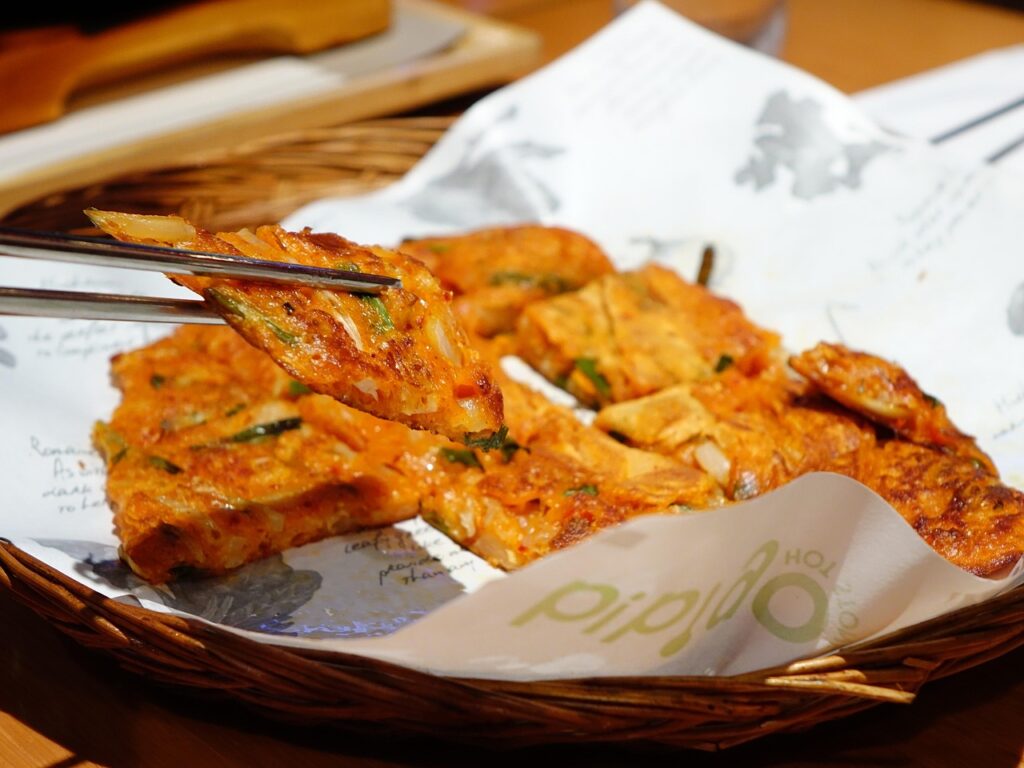
Cooking Kimchi Jeon requires preheating a lightly oiled pan over medium heat, allowing the pancake to crisp and brown evenly. Once the batter is spread thinly across the pan, it typically cooks for several minutes until the edges turn golden and the surface firms up. The pancake is then carefully flipped to achieve a crisp exterior on both sides while keeping the inside moist and flavorful. The key technique involves maintaining the right temperature to prevent burning while allowing enough time for the flavors to meld. When cooked properly, a well-made Kimchi Jeon features a vibrant red hue, crunchy edges, and a rich, savory aroma. It is generally served hot and sliced into small pieces, making it easy to share among friends or family.
How to Enjoy Kimchi Jeon
Kimchi Jeon is best enjoyed fresh off the pan, where its crisp texture and bold flavors are most pronounced, and it can be paired with a simple dipping sauce made from soy sauce, vinegar, and a hint of chili for added brightness. Many people also enjoy combining Kimchi Jeon with other Korean dishes such as soups, rice meals, or side dishes that complement its savory profile. Its versatility allows it to function as a snack, appetizer, or main dish depending on the portion size and accompanying foods. In social settings, it often appears alongside Korean rice wine, creating a pairing that highlights both the acidity of the kimchi and the smooth sweetness of the drink. Whether served at home, in traditional markets, or at casual restaurants, Kimchi Jeon maintains its comforting appeal and remains a dish that embodies the warmth of Korean cooking traditions.
Final Thoughts
Kimchi Jeon captures the essence of Korean comfort food through its simple preparation, bold flavors, and strong cultural associations, making it a dish that resonates with both locals and visitors. Its versatility, accessibility, and uniquely satisfying taste ensure that it continues to be cherished across generations. Whether you’re discovering Korean cuisine for the first time or deepening your appreciation for traditional flavors, Kimchi Jeon is a must-try dish that offers an authentic glimpse into everyday Korean cooking.