1. Introduction to Dotori-muk
Dotori-muk is a traditional Korean dish made from acorn starch. It has a smooth texture and a mild flavor. Many Koreans enjoy it as a light and refreshing meal. The dish is often served with seasoned soy sauce. This sauce adds depth and balance to the subtle taste of the jelly. Dotori-muk has been part of Korean cuisine for many years. Its simplicity reflects the resourcefulness of past generations. People valued acorns as an accessible ingredient. They used them to create nourishing food. Dotori-muk still holds cultural meaning in many regions. It is enjoyed at home and in local markets. It is also served in traditional restaurants. The dish appeals to those who prefer clean and healthy flavors. It fits well into modern diets that value natural ingredients. Dotori-muk continues to gain attention from global food enthusiasts. Its quiet charm makes a lasting impression on many visitors.
2. How Dotori-muk Is Made
Dotori-muk is prepared using acorn starch mixed with water. The mixture is heated slowly until it thickens. It is stirred constantly to maintain a smooth texture. Once it reaches the right consistency, it is poured into a mold. The mixture cools and becomes firm. This process creates the familiar jelly-like block. The block is then sliced into thin pieces. These pieces are served with a seasoned sauce. The sauce usually contains soy sauce, garlic, and sesame oil. Some recipes add green onions and chili. The ingredients depend on personal taste. The method is simple but requires patience. The heating stage needs careful attention. Any rushed steps change the texture. Traditional cooks respect this slow process. They believe patience brings the best flavor. The result is a clean dish with a calm presence. This careful method has been passed down for generations.
3. Flavor Profile and Culinary Characteristics
Dotori-muk has a very mild taste. It absorbs flavors from its seasoning. The jelly itself is smooth and firm. It offers a gentle bite that many people enjoy. The seasoned soy sauce adds bold notes. Garlic brings heat and aroma. Sesame oil provides a rich finish. These ingredients create balance in each bite. The contrast between the jelly and the sauce is pleasant. Many diners appreciate this harmony. The dish feels light yet flavorful. It does not overwhelm the palate. This makes it ideal for warm seasons. Koreans often serve it at outdoor gatherings. It also appears in traditional feasts. The dish pairs well with vegetable sides. It fits easily into many meals. Dotori-muk works as a main dish or a side. Its versatility adds to its appeal. It invites simple yet thoughtful eating. Many Korean dishes highlight natural flavors. Dotori-muk follows this philosophy. It celebrates balance and restraint. This quality attracts people seeking clean flavors.
People who prefer gentle tastes enjoy Dotori-muk. It offers comfort without heaviness. It suits those who want healthier choices. Its ingredients are simple and natural. The dish reflects traditional Korean values. It emphasizes harmony with nature. Dotori-muk continues to gain interest worldwide. Many travelers discover it while exploring Korea. They appreciate its quiet beauty. It stands out through simplicity rather than boldness. The flavor becomes memorable for its calm presence. Many describe it as refreshing. It provides a peaceful pause during a meal. Dotori-muk represents the essence of Korean culinary balance. It brings together texture, flavor, and tradition. This combination makes it a valued dish.
4. Popular Ways to Serve Dotori-muk
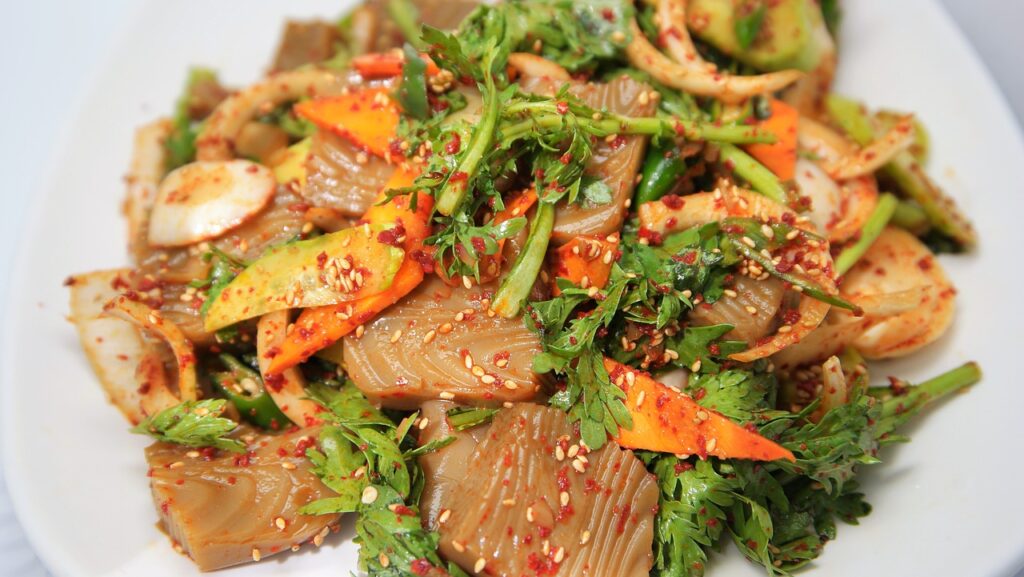
Dotori-muk is commonly served with seasoned soy sauce. The sauce brings brightness to the mild jelly. Some people top it with sliced vegetables. Cucumbers add a refreshing crunch. Carrots bring color and sweetness. These additions create a balanced dish. Many restaurants serve Dotori-muk as a side dish. It appears next to rice and soups. It provides a cooling contrast to warm foods. Home cooks enjoy its flexibility. It fits into meals without difficulty. It can be served cold during hot seasons. It also pairs with spicy dishes. The mild flavor helps soften stronger tastes. This makes it a useful part of Korean meals.
Some regions prepare Dotori-muk salads. These salads include vegetables and light dressing. They create a bright and healthy dish. The jelly also appears in traditional markets. Vendors slice it fresh for customers. Many people enjoy it as a quick snack. Dotori-muk is popular at festivals as well. It brings a sense of tradition to celebrations. The dish is easy to transport and serve. This makes it ideal for outdoor events. Its simple nature suits many occasions. People appreciate its gentle flavor and clean finish.
5. Cultural Value and Modern Appeal
Dotori-muk carries cultural meaning in Korea. It reflects past generations’ resourceful cooking. The dish remains part of daily life today. Many people enjoy its clean and natural taste. It appeals to modern eaters seeking healthy food. Travelers often discover it while exploring Korean cuisine. They appreciate its calm and balanced flavor. Dotori-muk continues to represent Korean simplicity and tradition.