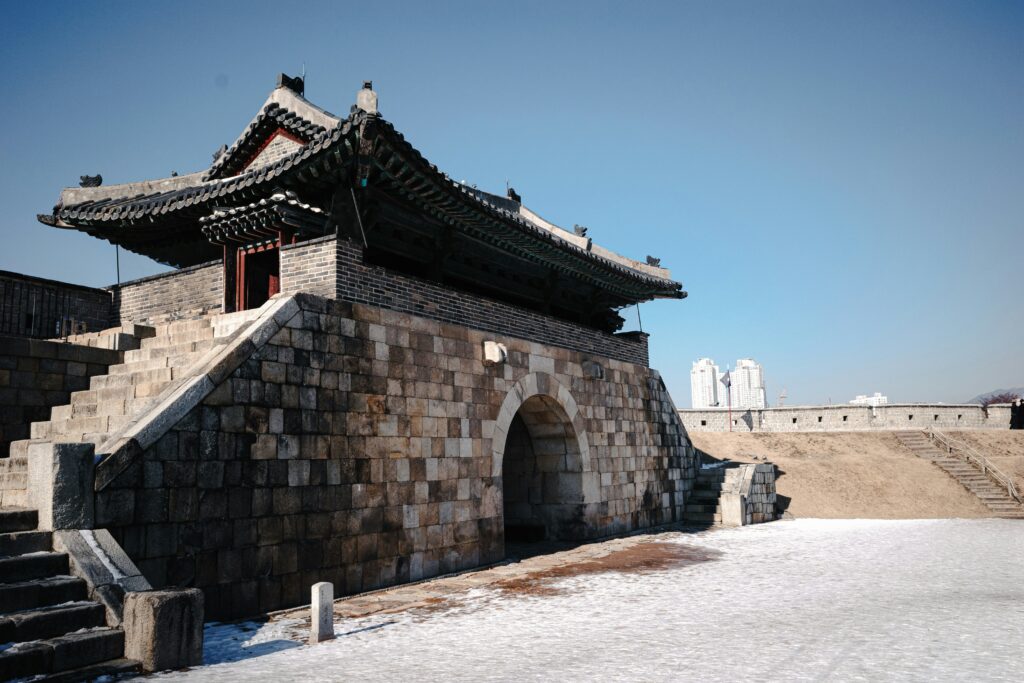
Nestled just south of Seoul, Suwon is a charming city that beautifully blends history and modern life. Often referred to as the “City of the Fortress,” Suwon is best known for its Hwaseong Fortress, a UNESCO World Heritage site that stands as one of Korea’s most remarkable historical landmarks.
🌿 A Brief History of Hwaseong Fortress
Hwaseong Fortress was built in the late 18th century (1794–1796) during the reign of King Jeongjo, the 22nd ruler of the Joseon Dynasty. The fortress was constructed to honor and protect the tomb of his father, Prince Sado, and to establish a new political and economic center outside Seoul.
What makes Hwaseong unique is its combination of traditional Korean architecture and modern military science of its time. The design incorporated advanced engineering techniques influenced by both Eastern and Western fortification styles. This was revolutionary in late 18th-century Korea.
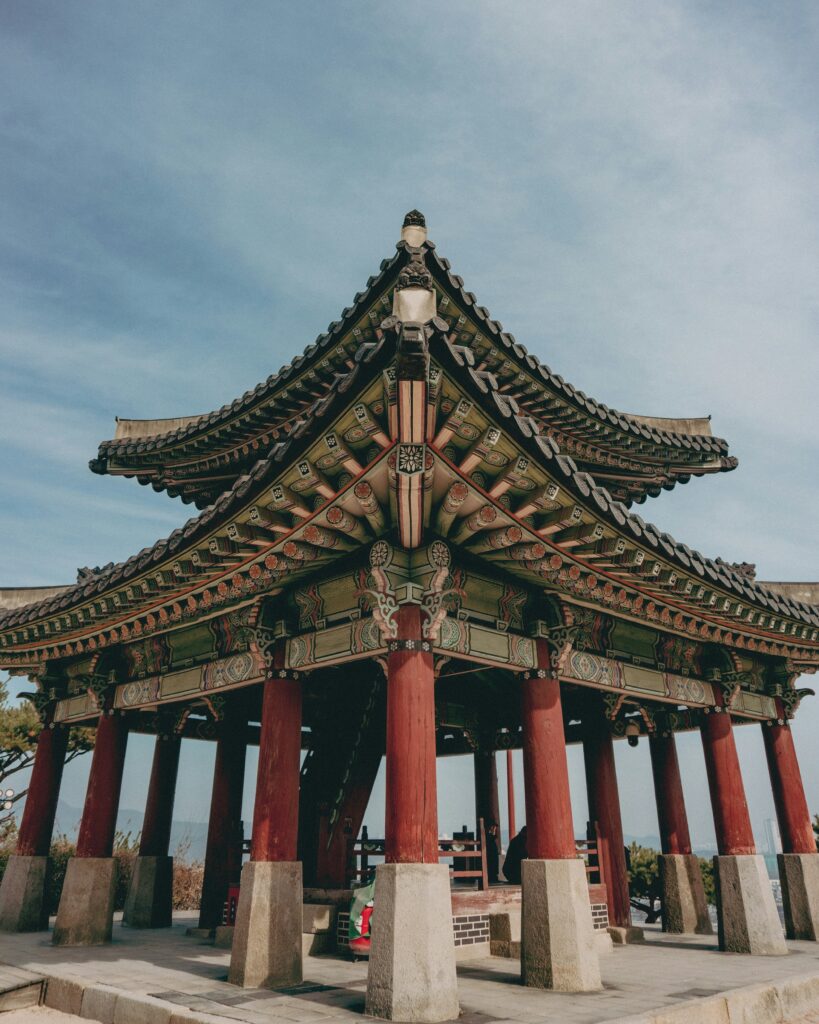
The fortress stretches 5.7 kilometers around the city, featuring massive stone walls, watchtowers, command posts, secret gates, and pavilions — each serving a distinct purpose in defending the city. Today, it remains one of the most well-preserved fortifications in East Asia.
🏯 Things to See Around Hwaseong
- Hwaseomun Gate (West Gate): The grandest gate of the fortress, offering panoramic views of Suwon city.
- Janganmun Gate (North Gate): The largest gate and a perfect spot for photos, especially at sunset.
- Hwaseong Haenggung Palace: A temporary palace used by King Jeongjo during his visits to Suwon. Visitors can experience traditional Korean performances, royal guards’ parades, and even try on hanbok (Korean traditional clothing).
- Seojangdae Command Post: Once the control center for the fortress’ defense, it now serves as a scenic lookout over the city.
If you’re into hiking, walking along the fortress wall is a must-do. The entire loop takes about 2 to 3 hours, depending on your pace, and offers a mix of cultural landmarks, peaceful nature, and stunning cityscapes.
☕ Modern Suwon: More Than Just History
Beyond its historic walls, Suwon is also a vibrant modern city known for:
- Suwon Chicken Street 🍗 – the birthplace of Korean fried chicken, where dozens of restaurants compete for the best flavor.
- Samsung Innovation Museum 🧠 – a fascinating look at the history of technology and electronics.
- Ingye-dong Café Street ☕ – a trendy area filled with cozy cafés and dessert shops.
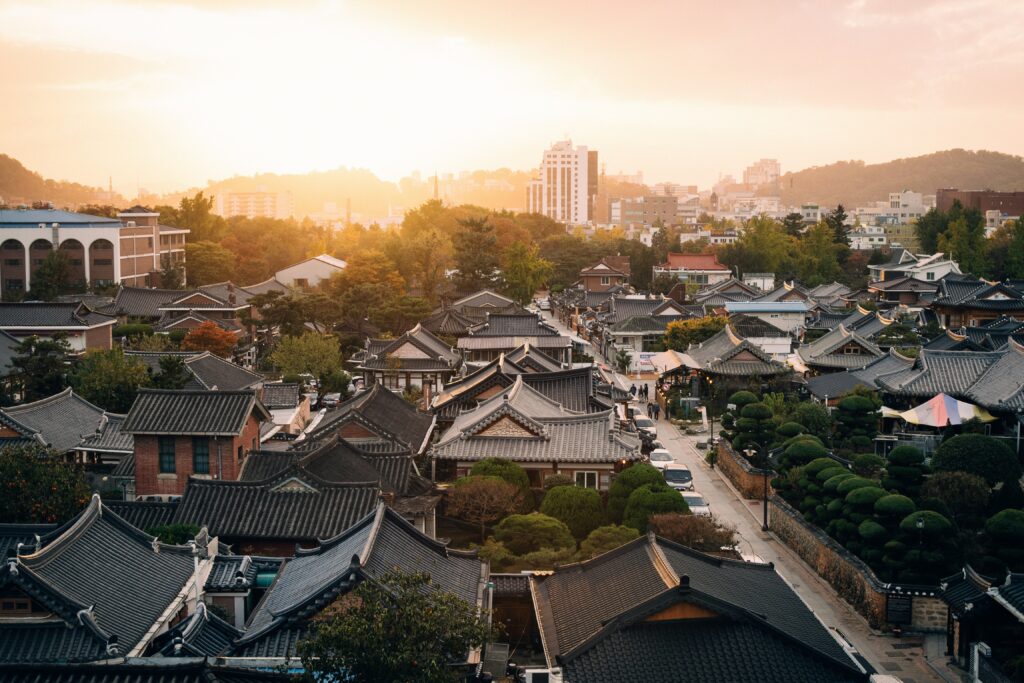
The blend of ancient architecture and urban culture gives Suwon a unique charm — it’s a place where the past and present truly coexist.
🚆 How to Get There
From Seoul Station, take the KTX or subway Line 1 to Suwon Station (about 30–40 minutes). From there, you can take a short bus or taxi ride to the fortress entrance.
Suwon is also perfect for a day trip from Seoul — easy to reach, yet offering a completely different atmosphere.
💭 Final Thoughts
Visiting Suwon is like stepping into a living history book. The Hwaseong Fortress not only tells the story of a devoted king and his father but also showcases Korea’s architectural brilliance and cultural depth.
Whether you’re a history lover, photographer, or just a traveler looking for something beyond Seoul, Suwon is a must-visit destination that captures the heart of Korea’s past and present in one beautiful city.